
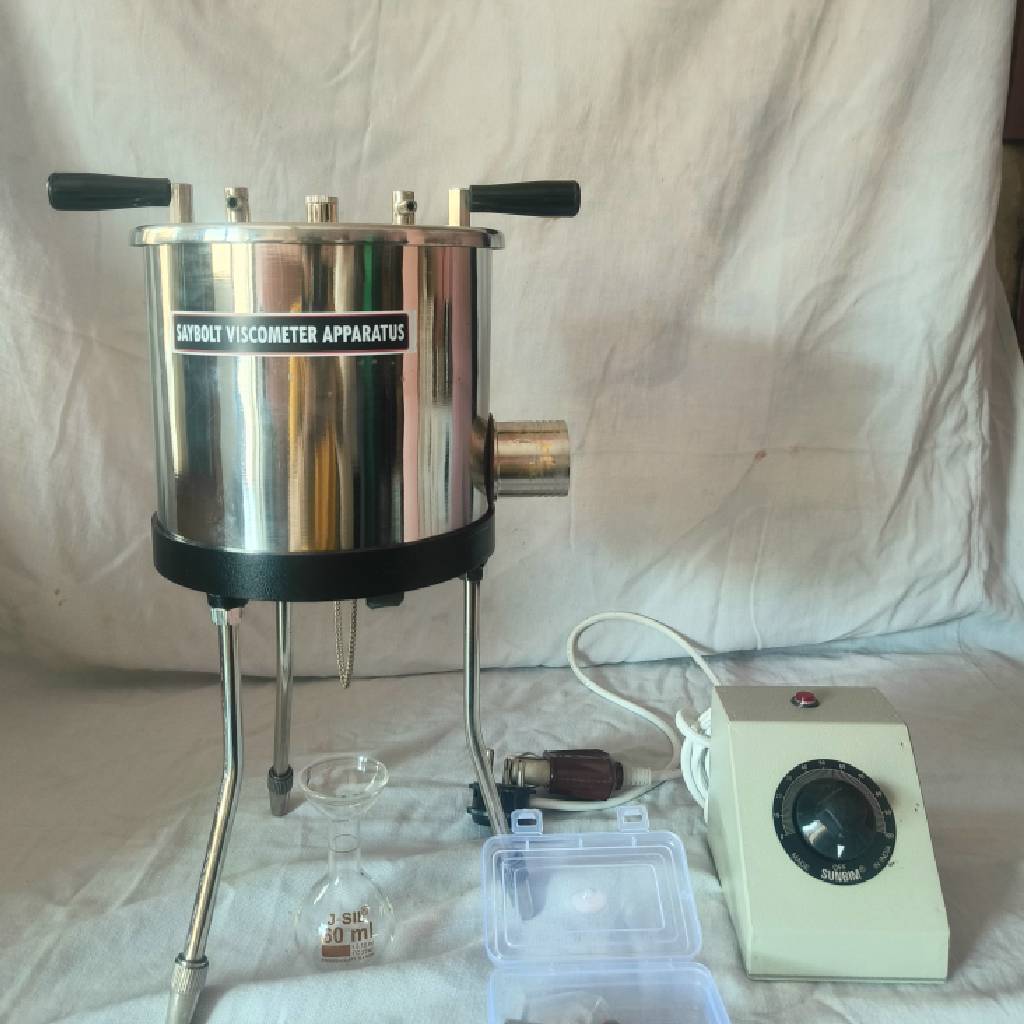
Saybolt Viscometer Apparatus
Product Description
Elect. Heating with Energy Regulator control
Optional Accessories
Strainer for filtering oil
Withdrawl Tube (Metal)
Spare Cup without Jets
Spare Jet Universal
Spare Jet – Furol
Flask 60 сс.
Polish Wooden Case for above App.
ASTM 17C Thermometer (19–27°C)
ASTM 18C Range 34 to 42°C Thermometer
ASTM 19C Range 49 to 57°C Thermometer
ASTM 20C Range 57 to 65°C Thermometer
ASTM 21C Range 79 to 87°C Thermometer
ASTM 22C Range 95 to 103°C Thermometer
COMMON RANGE Thermometer 0-100°С
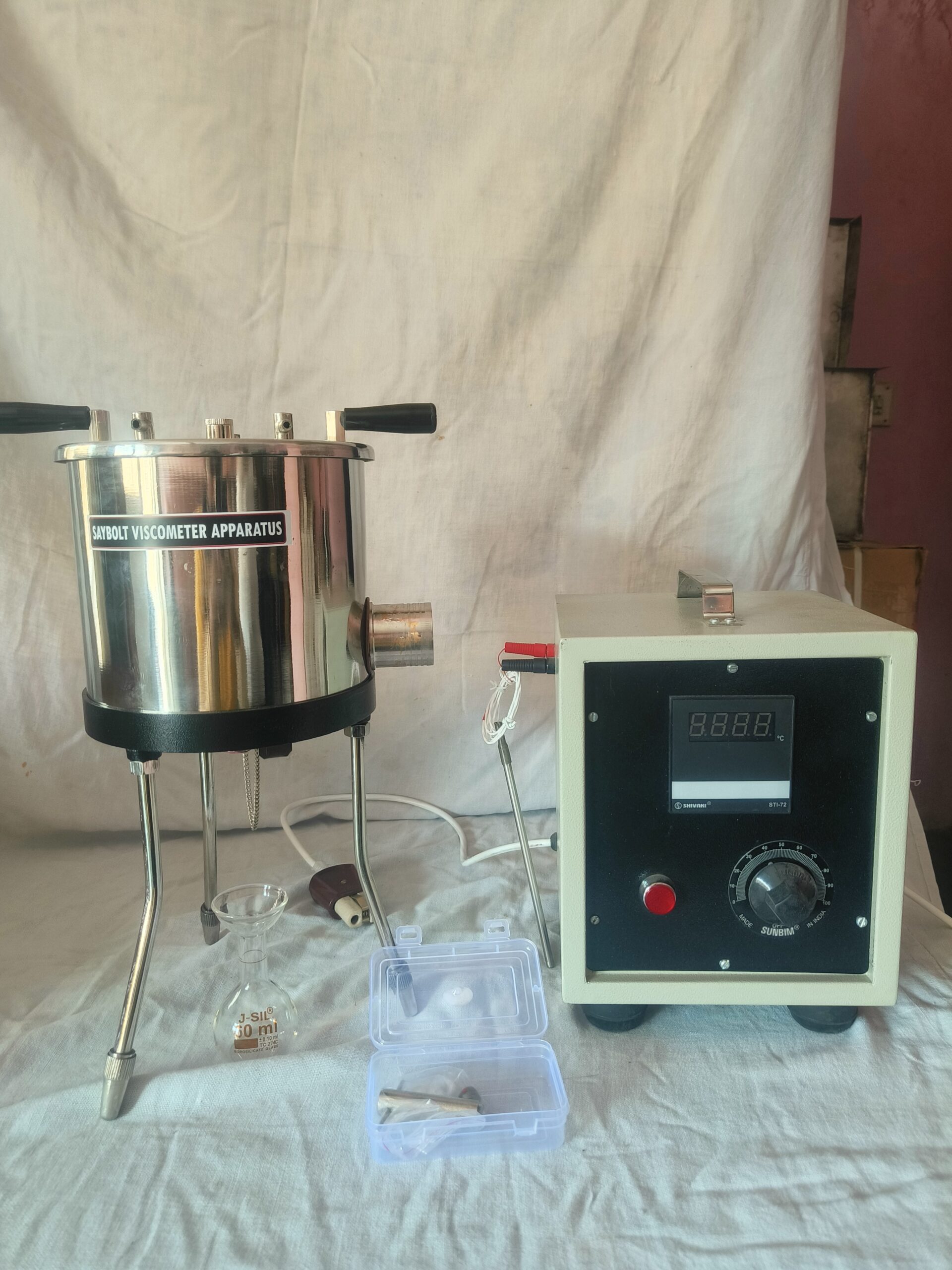
Electronic Digital Temp. Indicator and Regulator
Single Tube Saybolt Viscometer with Control Pannel (Double Walled) Digital Electronic Temp. Controller and F.H.P. Motor Stirrer
Two Tubes Saybolt Viscometer with Control Pannel (Double Walled) Digital Electronic Temp. Controller and F.H.P. Motor Stirrer
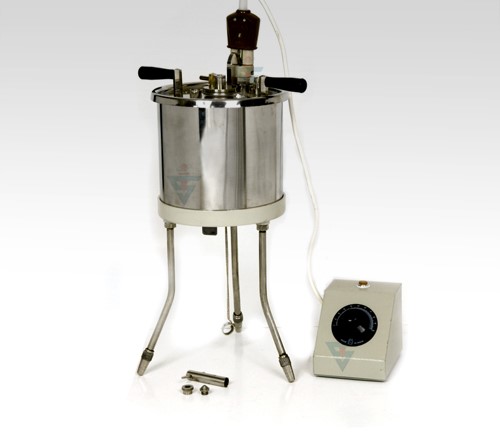
Made as per ASTMD-88 specifications with Universal and Furol Jets made of Stainless Steel, Stirring is done by hand with turn table arrangement (without Strainer, withdrawl Tube and glass wares). Suitable to operate on 220 Volts AC mains.
- Elect. Heating with Energy Regulator control
- Elect. Heating with Electronic Indicator and Regulator
- Single Tubes Saybolt Viscometer with Control Panel (Double Walled) with Digital Electronic Controller and FHP Stirrer
- …same as above…With two tubes
- Optional Accessories
- Strainer for filtering oil
- Withdrawal Tube (Metal)
- Spare Cup without Jets
- Spare Jet Universal
- Spare Jet Furol
- Flask 60 cc.
- Polish Wooden Case for above App.
- ASTM 17C Range 19 to 27°C Thermometer
- ASTM 18C Range 34 to 42°C Thermometer
- ASTM 19C Range 49 to 57°C Thermometer
- ASTM 20C Range 57 to 65°C Thermometer
- ASTM 21C Range 79 to 87°C Thermometer
- ASTM 22C Range 95 to 103°C Thermometer
- COMMON RANGE THERMOMETER 0 – 100°C
FAQs
1. What is a Saybolt viscometer apparatus used for?
The Saybolt Viscometer is used for measuring the viscosity of petroleum oils and lubricants using Universal and Furol jets, as per ASTM D-88 specifications for accurate and standardized viscosity testing.
2. How is Saybolt viscosity different from kinematic viscosity?
Saybolt viscosity measures the time taken for a fixed volume of oil to flow through a calibrated orifice at a set temperature, while kinematic viscosity measures the resistance to flow under gravity, expressed in centistokes.
3. What types of oils can be tested using this equipment?
The apparatus is equipped with both Universal and Furol jets, making it suitable for testing a wide range of petroleum oils — from light oils using the Universal jet to heavy oils and fuel oils using the Furol jet.
4. What standards does this viscometer comply with?
Yes, the Saybolt Viscometer is manufactured as per ASTM D-88 specifications, ensuring reliable and internationally recognized viscosity measurement for petroleum and lubricant testing.
5. Is training provided for operating the equipment?
The apparatus operates on 220 Volts AC mains and features hand stirring with a turntable arrangement. It is supplied without strainer, withdrawal tube, and glassware, which need to be arranged separately for complete operation.